



Black Salt (Namak Siyah): Properties, Traditional Uses, and Benefits
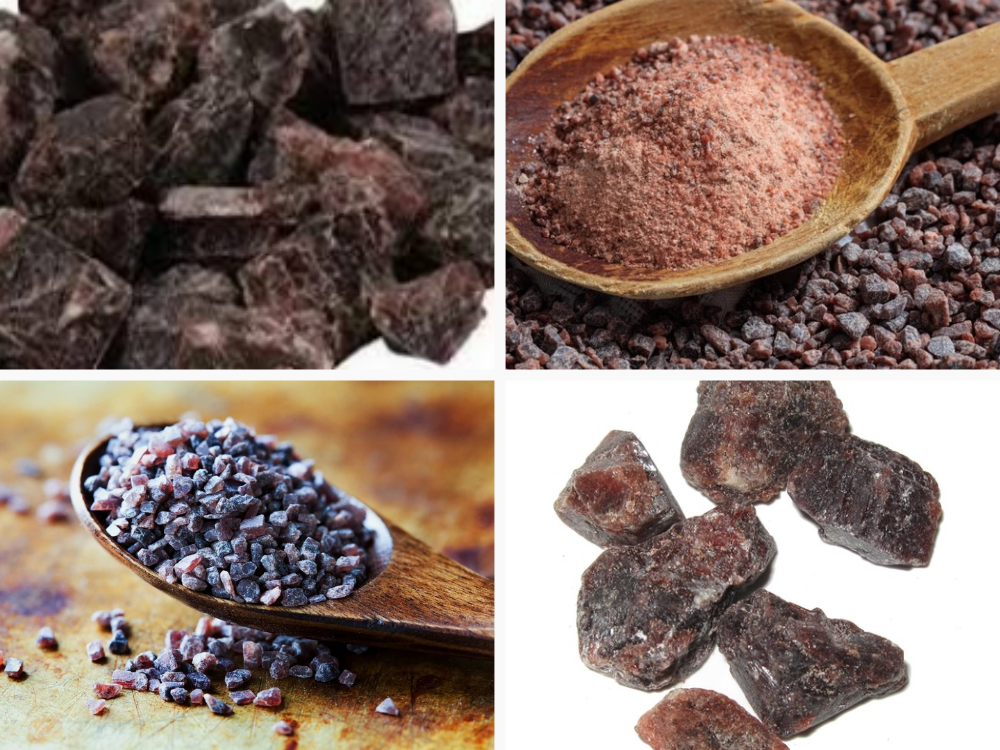
Introduction
Black salt, traditionally known as Namak Siyah, is a type of salt produced artificially by processing and combining various other salts. It has been widely used in traditional medicine and Ayurvedic preparations, particularly for supporting digestion and relieving abdominal discomfort. It is commonly added to digestive powders (Churan) and other traditional formulations.
Properties and Medicinal Actions
Black salt is traditionally described as having the following properties:
Carminative (helps relieve gas and flatulence).
Digestive (supports the digestive process).
Relieves abdominal pain and discomfort.
Acts as a laxative when taken with Harir (myrobalan).
Black salt is frequently included in digestive powders because of its traditional digestive properties. In several of its medicinal applications, it is considered comparable to Namak Nuqti.
Different Types of Artificially Prepared Salts
Several other salts are prepared artificially or processed from different mineral and salt sources. These include:
Namak Manhari
Namak Shor
Nali Namak
Namak Sosanchar
Some traditional classifications also include Soha (borax) among these substances.
In the Ayurvedic text Fakhr-e-Ayurveda, Krishna Dayal describes five varieties of salt, collectively known as Panch Noon.
According to the Bhava Prakasha, these five types are:
Sonchak Namak
Sendha Namak (rock salt)
Bar Namak
Siyah Namak (black salt)
Samundari Namak (sea salt)
Ingredients Used in Preparing Black Salt
According to traditional descriptions, Namak Siyah (black salt), also known as Sosanchar Namak, is prepared using different varieties of salt, including:
Sendha Namak (Lahori or rock salt)
Shokambhari or Salbhar salt
Samundari Namak (sea salt)
Bar Namak
Another naturally occurring substance is Khaj Lon, also known as Reh. It forms naturally as a white deposit on sandy, damp soil.
Namak Nuqti is also known as Namak Tabarzad. It is a type of mountain salt that resembles Lahori Namak in appearance.
General Uses and Effects of Salt in the Body
Salt plays several important roles in the body's physiological processes. According to traditional descriptions, it enhances the movement and diffusion of dissolved substances through porous bodily membranes. It is also associated with improved utilization of albumin (a major blood protein) and the elimination of urea from the body.
Other traditionally described effects include:
Acts as a diuretic and promotes urine production.
Increases thirst.
Supports the production of lymphatic fluid.
Influences the activity of ptyalin (salivary amylase).
Enhances the action of digestive enzymes, including trypsin and pepsin.
Promotes the secretion of pepsin in the stomach.
Supports the body's absorptive processes.
An inadequate intake of salt may contribute to weakness and disturbances in fluid and electrolyte balance. However, anemia and edema have several possible causes and should not be attributed to salt deficiency alone.
External Uses of Salt
Salt has also been traditionally used in various external applications.
1. Cold-Water Douche
A douche using cold water has traditionally been recommended for weakness in young girls. This is an old traditional practice rather than an established medical treatment.
2. Salt-Water Bath
Bathing in warm water containing salt has traditionally been used to relieve discomfort associated with joint pain, arthritis, gout, and sciatica. However, it does not treat the underlying causes of these conditions.
3. Gargling with Salt Water
Gargling with cold salt water has traditionally been recommended for a relaxed or elongated uvula. Salt-water gargles are also commonly used to soothe minor throat irritation.
4. Inducing Vomiting
Traditional sources describe the use of salt water to induce vomiting quickly. This practice is unsafe and should be avoided because excessive salt intake can cause serious sodium poisoning.
5. Saline Enema
A saline enema has traditionally been used in cases of intestinal worms and severe constipation. However, enemas should only be used with appropriate medical guidance, as improper preparation or use can cause complications.
6. Removing Leeches from the Throat
Traditional practice recommends gargling with salted water when a leech becomes attached inside the throat. However, a leech in the throat can cause bleeding or airway obstruction and requires urgent medical attention rather than home treatment.
Dosage
The traditional dosage of black salt is given as 2–6 mashas, equivalent to approximately 2–6 grams.
The quantity should not be interpreted as a recommended daily intake. Excessive salt consumption can increase blood pressure and create other health risks. People with hypertension, kidney disease, or heart conditions should be particularly cautious.
Recent Posts
Curculigo Orchioides (Black Musli): Description, Traditional Uses, and Medicinal Properties

Mimusops elengi Linn. (Mulsari): Traditional Medicinal Uses, Properties, and Benefits
Pyrethrum Indicum (Bozidan): Traditional Medicinal Uses, Properties, and Benefits

Mesua ferrea (Nagkesar): Description, Medicinal Properties, and Traditional Uses