






Bauhinia Variegata (Kachnar): Traditional Medicinal Uses and Therapeutic Benefits
Introduction
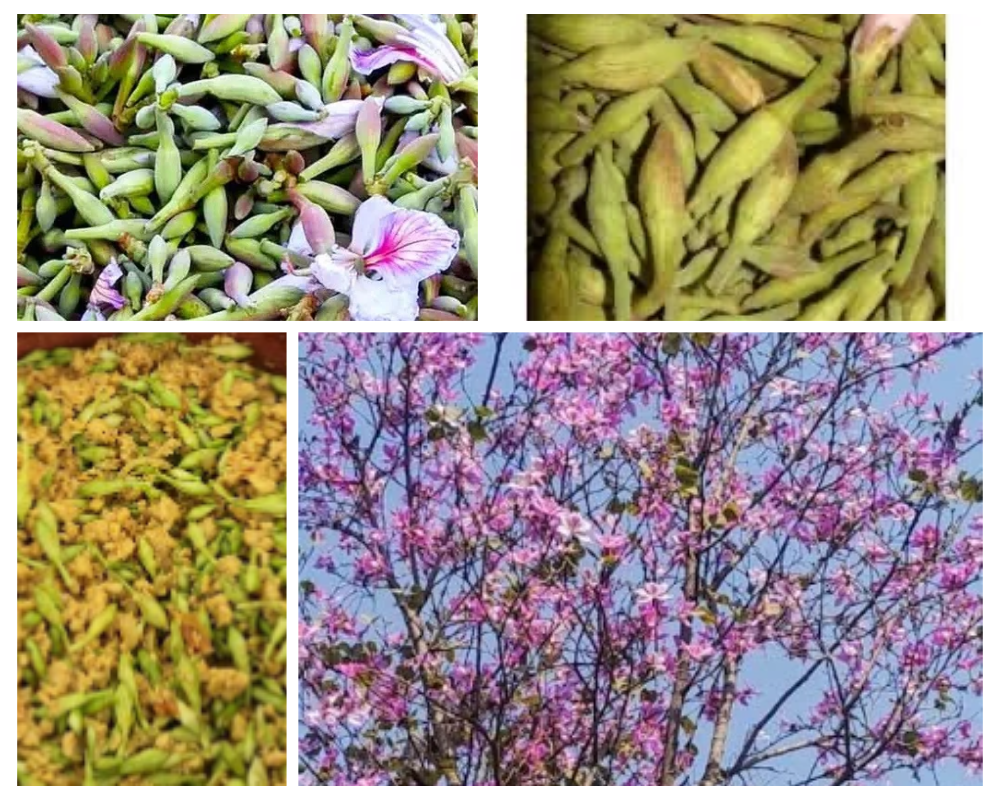
Bauhinia variegata, commonly known as Kachnar, is a well-known medicinal tree found in Pakistan and India. It occurs in several varieties, thirteen of which have been documented by Dr. Sely. The tree grows naturally in various regions and is also widely cultivated in gardens for its attractive flowers and medicinal properties.
Botanical Description
Kachnar is a medium-sized tree with smooth, greyish bark. Its leaves are distinctive, with the upper portion divided into two nearly equal lobes. They measure approximately three to five inches in length and are almost equally wide. The upper surface of the leaves is covered with fine hairs, while the underside is smooth.
The flowers grow in different colors, including red, white, purple, and yellow. They appear during spring and develop from buds. In traditional cooking, the flower buds are commonly prepared as a vegetable or used to make raita, a yogurt-based side dish.
Fruit and Seeds
The tree produces straight, flat pods measuring approximately one span (about nine inches) in length. Each pod contains between six and twelve seeds.
Kachnar also holds cultural and religious significance in Buddhism. It is regarded as a sacred tree and is traditionally planted within Buddhist monasteries, known as viharas.
Chemical Composition
The bark of Kachnar contains tannins, glucose, and a brown-colored gum. These constituents contribute to its traditional medicinal applications, particularly its astringent properties.
Temperament
According to traditional Unani medicine, Kachnar has a cold and dry temperament in the second degree.
Therapeutic Properties and Actions
Kachnar is traditionally recognized for its astringent, anti-diarrheal, anti-hemorrhoidal, and hemostatic properties. It is also considered beneficial for calming disturbances associated with blood and bile and is traditionally used as a blood purifier.
Its principal therapeutic action is haemostatic, meaning that it is traditionally used to help control bleeding.
Traditional Medicinal Uses of Kachnar
Diarrhoea and Chronic Intestinal Disorders
Kachnar is traditionally used to manage diarrhoea and chronic intestinal complaints, including Sangrahani, a condition associated with persistent digestive disturbances. Both the flower buds and bark are used for this purpose, commonly prepared as a decoction.
Bleeding Hemorrhoids
The astringent and hemostatic properties of Kachnar make it a traditional remedy for bleeding associated with hemorrhoids. It is believed to help control excessive bleeding.
Excessive Menstrual Bleeding and Blood in Urine
In traditional medicine, Kachnar is used for excessive menstrual bleeding and hematuria (the presence of blood in the urine). Its hemostatic properties are considered particularly useful in these conditions.
Blood Purification and Medicinal Decoctions
Because of its traditionally recognized blood-purifying and blood-calming properties, Kachnar is included in Matbukh-e-Haft Roza, a medicinal decoction prepared over seven days in traditional Unani practice.
Mouth Ulcers and Oral Inflammation
A decoction of Kachnar is traditionally used as a gargle or mouth rinse for ulcers affecting the tongue and the inner surfaces of the mouth. It is also mentioned as a remedy for oral soreness and inflammation caused by the use of mercury-containing preparations, such as Raskapoor.
Boils, Pimples, and Skin Conditions
Kachnar is traditionally applied externally for boils and pimples. A topical paste, known as Zimad, prepared from Kachnar is also used for vitiligo and Kanth Mala (scrofula or cervical lymphadenopathy).
For these applications, the bark of the red-flowered variety is ground together with dried ginger (Sonth) and rice water to prepare a paste for external application.
Ear Infections
Kachnar is also mentioned in traditional medicine for ear-related complaints, including otitis (inflammation or infection of the ear).
Additional Medicinal Benefits
Flatulence and Obesity
A decoction prepared from the root bark of Kachnar is traditionally used to alleviate flatulence and is also recommended in traditional medicine for obesity.
Eye Irritation and Inflammation
For painful, red, or watery eyes, fresh Kachnar leaves are crushed and formed into a soft poultice or pad. This preparation is traditionally applied over the closed eyes to provide relief.
Parts Used
Different parts of the Kachnar tree are used in traditional medicine, including:
Bark: Used in decoctions and powdered preparations.
Root bark: Traditionally used for flatulence and obesity.
Flower buds: Used for digestive complaints and also consumed as a vegetable.
Flowers: Used as food and in traditional preparations.
Leaves: Applied externally in traditional remedies for eye discomfort.
Dosage in Traditional Medicine
The traditional dosage recommendations for Kachnar are:
Bark decoction: One tola (approximately 12 grams).
Powdered bark: Three mashas (approximately 3.75 grams), with the stated dosage range extending from six mashas (approximately 7.5 grams) to one tola (approximately 12 grams).
The appropriate preparation and dosage depend on the intended traditional application.
Safety Precautions
The medicinal uses and dosage information presented here are based on traditional Unani and herbal practices and should not be considered established medical treatments. Scientific evidence for these applications may be limited. Persistent diarrhea, excessive menstrual bleeding, blood in the urine, recurrent bleeding, hemorrhoids, and eye or ear infections require proper medical assessment. Eye poultices and unsterile preparations should be avoided because they may introduce infection or worsen irritation. Consult a qualified healthcare professional before using Kachnar medicinally, particularly during pregnancy, breastfeeding, or when taking other medicines.
Recent Posts

Curculigo Orchioides (Black Musli): Description, Traditional Uses, and Medicinal Properties

Mimusops elengi Linn. (Mulsari): Traditional Medicinal Uses, Properties, and Benefits

Pyrethrum Indicum (Bozidan): Traditional Medicinal Uses, Properties, and Benefits






Mesua ferrea (Nagkesar): Description, Medicinal Properties, and Traditional Uses


