



Castor Plant (Ricinus communis): Medicinal Properties, Traditional Uses, and Benefits
Introduction
The castor plant (Ricinus communis), commonly known as Arand or Bed-anjeer, is a medicinal plant widely found throughout Pakistan and India. It grows both naturally in the wild and as a cultivated crop. Various parts of the plant, including its leaves, seeds, kernels, roots, and extracted oil, have been used in traditional medicine for different purposes.
Castor oil, obtained from the seeds, is particularly well known for its purgative and laxative properties. In traditional Unani medicine, the plant is also valued for its reported ability to soften hardened swellings, relieve pain, and help expel intestinal worms. However, its seeds contain ricin, a highly poisonous substance, making proper processing and handling essential.
Botanical Description
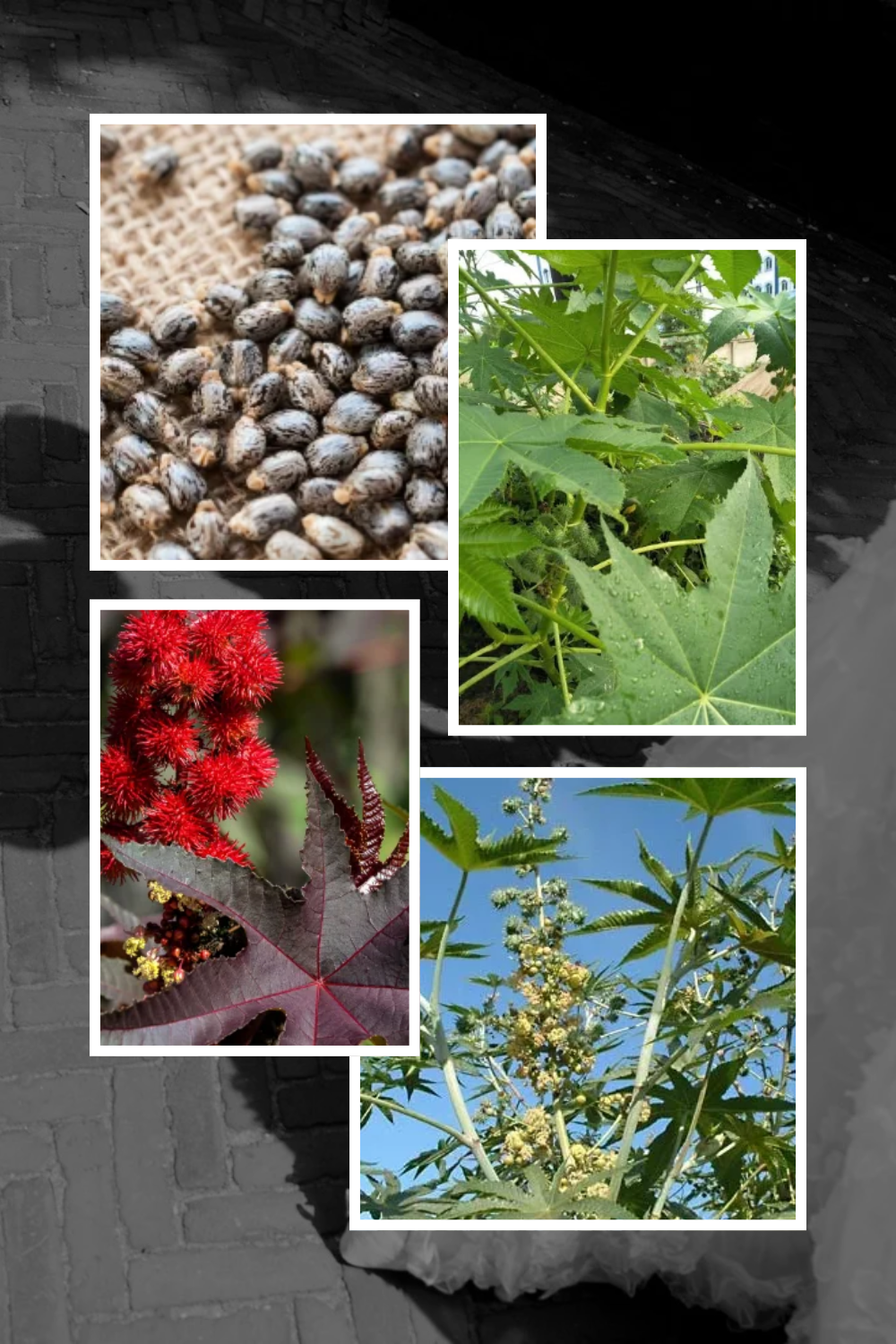
The castor plant generally grows to a height of 8–15 feet. Its stems and leaf stalks are covered with a whitish, powdery substance that can adhere to the skin upon contact.
Leaves
The leaves are large and broad, divided into five segments resembling the shape of a human palm. Their edges are serrated or notched, while the leaf stalks may grow up to one foot long. The inner surface of the stalks is blackish in colour.
Flowers
When the flowers bloom, yellow-coloured stamens or central floral structures become visible.
Fruits
The fruits develop in clusters and are approximately the size of a small gourd or pumpkin. Each fruit is enclosed in a green outer covering or husk with numerous soft, fine spines.
Seeds
The seeds are generally brownish-black or reddish-brown. Two varieties of the plant are traditionally distinguished: one produces red fruits, while the other produces white fruits. Each fruit contains seeds protected by an outer covering. When this covering is removed, a white kernel becomes visible.
Cultivation and Habitat
Castor seeds are generally sown at the beginning of the monsoon season. The plant develops during the rainy months, and its fruits ripen around Asoj (mid-autumn). It produces fruit twice a year. The seeds harvested during the Kharif season are usually larger, whereas those produced during the Rabi season are comparatively smaller.
Oil is extracted from the seeds for medicinal and other purposes. The leaves, kernels, and oil are traditionally utilized, while the roots are also mentioned in some medicinal practices.
The castor plant grows throughout Pakistan and India. It can be found growing naturally in uncultivated areas as well as in agricultural fields.
Medicinal Properties and Traditional Actions
In traditional Unani medicine, different parts of the castor plant are associated with several medicinal properties. The seed kernel is traditionally described as:
Anthelmintic: Used to help eliminate intestinal worms.
Purgative: Traditionally used to promote bowel evacuation.
Emmenagogue: Traditionally believed to stimulate menstruation.
Resolvent: Used to help soften hardened swellings and indurations.
Anodyne: Associated with relieving pain.
Detergent: Traditionally used as a cleansing agent.
Softening agent: Applied to hardened tissues and swellings.
Castor leaves are also traditionally considered useful for reducing swelling and relieving discomfort.
Traditional Medicinal Uses of Castor Plant
Expelling Intestinal Worms
Castor preparations have traditionally been used alongside vermicidal medicines to facilitate the removal of intestinal worms. Their purgative action is believed to help expel dead worms and other unwanted intestinal contents following treatment.
Softening Hardened Swellings and Indurations
In traditional medicine, castor preparations have been used for hardened tissues, enlarged lymph nodes, scrofulous swellings, and other firm masses.
The kernels were traditionally prepared as a poultice or cooked into a thick paste resembling kheer. This preparation was applied externally with the intention of softening hardened tissues and reducing swelling.
Use in Phlegmatic Disorders
Unani medicine traditionally associates castor preparations with the management of phlegmatic (Balghami) conditions, including paralysis, facial paralysis (Laqwa), tremors, cough, asthma, colic, muscular weakness, and joint pain.
According to traditional practice, castor preparations were administered after a Munzij (a medicine intended to mature or prepare accumulated humours for elimination). Their purgative action was believed to help remove excess phlegm and serous fluids from the body.
These historical uses should not be considered established treatments for neurological, respiratory, or other serious medical conditions.
Skin Conditions and Joint Pain
Castor preparations have traditionally been applied externally for skin blemishes, warts, scabies, gout, and joint discomfort.
The seed preparations were described as cleansing, softening, and pain-relieving agents. Castor leaves were also used as external applications for painful swellings.
Use of Castor Leaves for Swelling and Pain
The leaves are traditionally valued for their resolving and pain-relieving properties. One traditional method involves warming the leaves slightly and applying them to the affected area after using warm oil.
Another preparation involves cooking or crushing the leaves into a soft mixture known as Bhujiya, which is then applied externally to swollen areas.
Traditional Use in Snakebite
Historical Unani texts describe castor leaves as an antidotal remedy for snake venom. The traditional method involved crushing tender leaves and applying the preparation to the bite area.
However, this practice is not medically proven and must never be used as a substitute for emergency treatment. Snakebite requires immediate hospital care and appropriate antivenom when indicated. Inducing vomiting or purging does not neutralize snake venom.
Traditional Use in Opium Poisoning
Castor preparations are also mentioned in traditional literature as remedies for opium toxicity. However, they are not safe or effective antidotes for opioid poisoning. Suspected overdose requires immediate emergency medical assistance and appropriate treatment, including naloxone when indicated.
Castor Oil (Roghan-e-Bed-anjeer)
Castor oil, traditionally known as Roghan-e-Bed-anjeer, is obtained from the seeds of the castor plant. It is generally yellowish in colour. Traditional descriptions mention that refining and processing can produce a lighter or white-coloured oil, which was historically considered more beneficial.
Castor oil is widely recognized for its laxative properties and has traditionally been used in different medicinal preparations.
Temperament
According to Unani medicine, castor oil has a hot and dry temperament of the second degree.
Medicinal Actions of Castor Oil
Traditional medicinal literature attributes the following properties to castor oil:
Purgative: Promotes bowel movements.
Laxative: Helps relieve constipation.
Expectorant: Traditionally associated with facilitating the removal of phlegm.
Intestinal lubricant: Used in traditional preparations intended to ease intestinal passage.
Anthelmintic: Traditionally used against intestinal worms.
Anti-inflammatory: Associated with reducing swelling.
Analgesic: Used for relieving pain.
Traditional Uses of Castor Oil
Constipation and Colic
Castor oil has traditionally been used as a purgative for constipation and certain types of colic, particularly those associated with flatulence or intestinal obstruction.
Its laxative action helps stimulate bowel movements. However, it should not be used when an intestinal obstruction is suspected, as this can lead to serious complications.
Intestinal Lubrication
In traditional medicine, castor oil was sometimes prepared as an emulsion known as Haleeb, a milk-like mixture, or used in enemas for intestinal lubrication.
Historical formulations also mention combining it with small quantities of gum or opium for particular digestive complaints. These preparations should not be reproduced or used as home remedies, particularly because opium carries significant risks of poisoning and respiratory depression.
Traditional Use for Dysentery
Some traditional formulations describe combining castor oil with milk for digestive complaints associated with severe intestinal obstruction (Sadda). One historical preparation mentions three to four tolas of castor oil.
This is a historical dosage reference, not a safe modern recommendation. Castor oil is not an established treatment for dysentery, which may require medical assessment and appropriate rehydration or antimicrobial treatment.
Intestinal Worms
Castor oil has historically been used in preparations intended to help eliminate intestinal worms. Its purgative action was believed to facilitate their removal from the digestive tract.
However, castor oil does not reliably kill intestinal parasites. Modern treatment depends on identifying the parasite and using an appropriate antiparasitic medicine.
Relief from Swelling and Pain
Castor oil has traditionally been applied externally, either alone or combined with other ingredients, for muscular discomfort, joint pain, and swelling.
When gently warmed, it has also been used in traditional massage preparations for firm swellings and hardened tissues. Such applications may provide temporary comfort, but they do not treat the underlying causes of arthritis or other inflammatory conditions.
Chemical Composition of Castor Seeds
The castor seed kernel contains several chemical constituents, including:
The seeds also contain ricin, a highly toxic protein capable of causing severe poisoning. Ricin is particularly dangerous when released from damaged or crushed seeds.
Castor oil produced through appropriate industrial processing does not normally contain significant ricin because the toxic protein remains in the seed-processing residue rather than the properly manufactured oil. However, homemade extraction and unprocessed seed preparations are dangerous.
Important Safety Precautions
Although castor oil has recognized pharmaceutical uses, the seeds and kernels of the castor plant are poisonous and should never be consumed as home remedies.
Ricin toxicity: Castor seeds contain ricin, a highly poisonous protein that can cause severe gastrointestinal illness, dehydration, organ damage, and potentially death.
Avoid seed consumption: Never eat whole castor seeds or their kernels, whether raw or crushed.
Avoid homemade preparations: Do not prepare medicinal oils, pastes, or extracts from castor seeds at home.
Pregnancy precautions: Castor oil can stimulate intestinal activity and may cause uterine contractions. It should not be used during pregnancy without specialist medical supervision.
Side effects: Medicinal castor oil may cause abdominal cramps, nausea, vomiting, and diarrhoea.
Snakebite and poisoning: Traditional castor remedies must never replace emergency medical treatment.
If castor seeds have been swallowed, seek immediate medical attention rather than waiting for symptoms to develop.
Specific Benefit
In traditional Unani literature, castor is particularly recognized for its purgative action and its reported use in softening hardened swellings and indurations.
Conclusion
The castor plant (Ricinus communis), commonly known as Arand or Bed-anjeer, has an important place in traditional Unani medicine. Its leaves, seeds, and extracted oil have historically been used for constipation, intestinal complaints, joint discomfort, and hardened swellings. Castor oil is particularly known for its laxative properties.
Despite its traditional medicinal importance, the presence of ricin makes the seeds and kernels extremely dangerous. Only properly manufactured castor oil intended for an approved use should be considered, and medicinal use should follow appropriate professional guidance.
Traditional reference: Further historical information about the medicinal properties of castor is available in Khawas-e-Arand (Properties of the Castor Plant), authored by Muhammad Abdullah and published by Idara Matboo'at-e-Sulaimani, Urdu Bazaar, Lahore.
Recent Posts

Curculigo Orchioides (Black Musli): Description, Traditional Uses, and Medicinal Properties
Mimusops elengi Linn. (Mulsari): Traditional Medicinal Uses, Properties, and Benefits
Pyrethrum Indicum (Bozidan): Traditional Medicinal Uses, Properties, and Benefits

Mesua ferrea (Nagkesar): Description, Medicinal Properties, and Traditional Uses