






Catechu (Acacia catechu): Medicinal Uses, Properties, and Health Benefits
Introduction
Catechu, scientifically known as Acacia catechu, is a thorny tree belonging to the Leguminosae (Fabaceae) family. It is valued in traditional medicine for its astringent, drying, and hemostatic properties. The extract obtained from its heartwood, commonly known as Khairia Kattha, is widely used in traditional remedies and is also consumed with betel leaves (paan).
Botanical Description
Family: Leguminosae (Fabaceae).
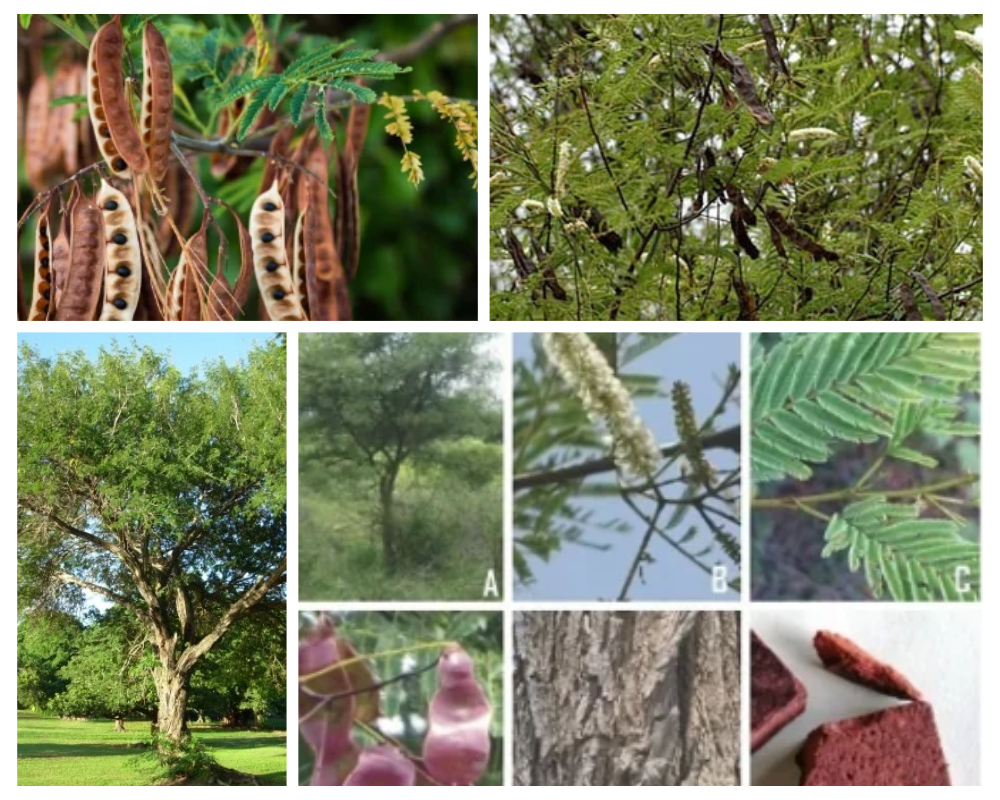
The catechu tree generally reaches a height of approximately 10–15 feet. It is a thorny tree with several varieties, of which the white and red types are the most well-known.
Bark
The bark is white or brown, approximately half an inch to three-quarters of an inch thick. The wood inside is reddish in color.
Leaves
The leaves resemble those of the babul (acacia) tree.
Flowers
The flowers are small and yellow.
Fruit and Pods
The pods are brown, approximately 2–4 inches long and 1.25–1.75 inches wide. Each pod contains around 5–10 seeds. They generally appear during the spring season (Basant), although in some regions they may develop during winter.
Catechu Extract (Khairia Kattha)
Catechu extract, commonly known as Khairia Kattha, is commercially available in the form of reddish-colored pieces. It has a bitter and astringent taste, followed by a slightly sweet aftertaste. It is traditionally used in various preparations and is frequently chewed with lime and betel leaves (paan).
Chemical Composition
Catechu contains approximately 25–35% catechu-tannic acid. During boiling, this substance undergoes conversion into catechin in the presence of saliva, according to traditional descriptions.
It also contains approximately 7% catechin (catechuic acid), along with pyrocatechin (catechol), quercetin, catechureted gambirine, and various waxy and oily components. Pyrocatechin produces a green color when combined with ferric chloride.
Temperament
According to traditional Unani medicine, catechu has a cold and dry temperament in the second degree.
Medicinal Properties and Actions
Catechu is traditionally recognized for the following properties:
Astringent: Helps tighten and contract body tissues.
Desiccative: Helps absorb moisture and dry excessive secretions.
Blood Purifier: Traditionally used in preparations intended to purify the blood.
Anthelmintic: Traditionally used to help expel intestinal worms.
Hemostatic: Traditionally valued for its ability to help control bleeding.
Medicinal Uses and Health Benefits
1. Bleeding Gums
Catechu is traditionally used to help control bleeding from the gums. Its astringent and hemostatic properties make it a common ingredient in traditional oral-care preparations.
2. Strengthening Teeth and Gums
In traditional medicine, catechu is believed to strengthen the roots of the teeth and support gum health. It is also used in preparations intended to maintain oral hygiene.
3. Oral Ulcers
Catechu is traditionally applied or included in preparations for oral ulcers because of its astringent and drying properties.
4. Relaxation of the Uvula
Traditional medicinal preparations containing catechu are used for conditions involving relaxation or swelling of the uvula, the small tissue hanging at the back of the throat.
5. Bleeding Inside the Mouth
Due to its traditionally recognized hemostatic properties, catechu is used in remedies intended to help control bleeding inside the mouth.
6. Wound Care
Catechu is traditionally valued for its astringent and drying effects. It is used in certain preparations intended to dry wounds and support their healing.
7. Use with Betel Leaves (Paan)
Catechu extract is commonly chewed with lime and betel leaves (paan). This is one of its most familiar traditional uses.
Specific Benefit
One of the principal traditional benefits of catechu is its use in preparations intended to control bleeding from the gums.
Traditional Dosage
The traditionally stated dosage of catechu is
1–2 mashas (approximately 1–2 grams).
The appropriate amount may vary depending on the preparation, individual circumstances, and intended use.
Safety Precautions
Catechu's traditional medicinal uses should not be considered a substitute for scientifically established medical treatment. Persistent bleeding from the gums may indicate gum disease or another underlying condition and should be assessed by a dentist.
Avoid self-medicating with concentrated catechu extracts, particularly in children, pregnant or breastfeeding individuals, or people taking medication, without consulting a qualified healthcare professional. The safety and effectiveness of its traditional uses for various medical conditions require further scientific evaluation.
Recent Posts

Curculigo Orchioides (Black Musli): Description, Traditional Uses, and Medicinal Properties

Mimusops elengi Linn. (Mulsari): Traditional Medicinal Uses, Properties, and Benefits

Pyrethrum Indicum (Bozidan): Traditional Medicinal Uses, Properties, and Benefits






Mesua ferrea (Nagkesar): Description, Medicinal Properties, and Traditional Uses


