






Elettaria Cardamomum (Green Cardamom)
Introduction
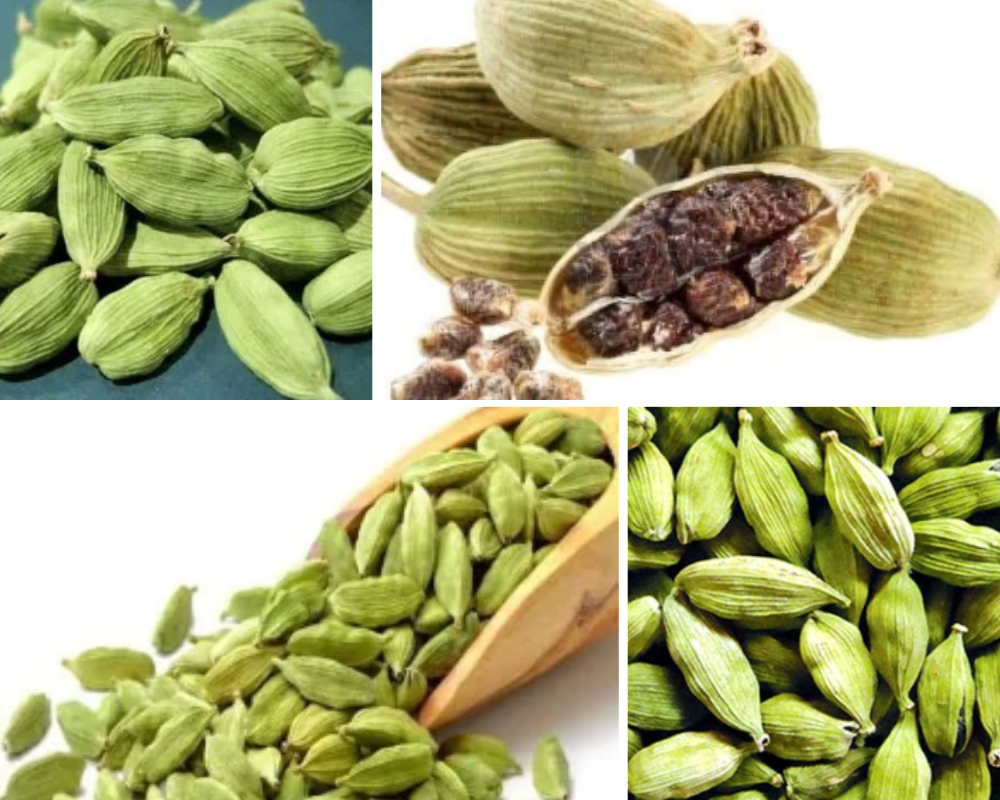
Elettaria Cardamomum, commonly known as green cardamom, is an aromatic plant widely valued for its culinary and medicinal properties. Its seeds have a pleasant fragrance and a sharp, slightly bitter taste. In traditional medicine, cardamom is particularly appreciated for its digestive properties and its traditional use in relieving nausea, vomiting, bloating, and abdominal discomfort. It is also regarded as a heart tonic and breath freshener.
Botanical Description
Cardamom is an evergreen plant that typically grows in damp soil and shaded environments. It resembles the ginger plant and requires suitable protection from heavy rainfall and direct sunlight.
At the base of its roots, the plant develops a knot-like structure from which upright, rod-shaped stalks emerge. These stalks bear leaves and can reach a height of approximately 5 to 8 feet.
Cardamom is traditionally sown during the months of Asoj and Katak (autumn). When the plants reach a height of approximately 3 to 4 feet, they are uprooted and transplanted beneath betel nut trees, where they can grow under shaded conditions.
Leaves
The leaves are approximately 1 to 2 feet long and 3 to 3.5 inches wide. They have a pleasant fragrance similar to that of cardamom and contribute to the plant's characteristic aromatic properties.
Flowers
Cardamom produces white or red flowers with a pleasant fragrance resembling that of its seeds.
Fruits and Seeds
The plant bears fruit during the months of Asarh and Sawan, corresponding to the monsoon season. The fruits grow in clusters and are initially green. Over a period of approximately two to three months, they mature and develop a yellowish-green colour.
The fruits contain small, highly aromatic seeds protected inside their husks. These seeds are generally whitish with a slightly dark appearance. Once harvested, the fruits are dried to preserve their aromatic properties.
Cardamom has several varieties that differ according to their geographical origin. These include:
Ceylon Cardamom: A small variety traditionally associated with Sri Lanka.
Round Cardamom: Found in regions such as Java, Sumatra, Thailand, and China.
Tegali Cardamom: A regional variety.
Nepalese Cardamom: Grown in Nepal.
Malabar Cardamom: A variety associated with the Malabar region of India.
The seeds have a sharp, slightly bitter taste and a strong, pleasant fragrance.
Temperament
According to traditional Unani medicine, cardamom has a hot and dry temperament of the second degree.
Medicinal Properties and Actions
Cardamom is traditionally valued for its digestive, aromatic, and stimulating properties. Its principal actions include:
Breath Freshener (Mutayyib-e-Dahan): Helps freshen the breath and reduce unpleasant mouth odour.
Carminative: Helps relieve intestinal gas, flatulence, and abdominal bloating.
Digestive Tonic: Traditionally used to improve digestion and relieve digestive weakness.
Cardiac Tonic: Traditionally regarded as beneficial for strengthening the heart.
Exhilarant (Mufarrih): Used in traditional medicine to promote a sense of well-being.
Antiemetic: Traditionally used to alleviate nausea and vomiting.
Medicinal Uses of Cardamom
Improving Digestion
Cardamom is traditionally used to support digestive function and relieve weak digestion. Its aromatic properties make it a common ingredient in digestive preparations. It is also used for abdominal discomfort associated with excessive gas and bloating.
Relief from Flatulence and Abdominal Pain
Cardamom is valued for its carminative properties. In traditional medicine, its seeds are used to help expel accumulated gas, reduce abdominal bloating, and relieve flatulent abdominal pain.
Relieving Nausea and Vomiting
One of the specific traditional benefits of cardamom is its use in alleviating nausea and vomiting. Its pleasant aroma and aromatic seeds make it a common ingredient in traditional preparations intended to settle digestive discomfort.
Supporting Heart Health
In Unani medicine, cardamom is considered a cardiac tonic and exhilarant. Traditionally, it has been used in preparations for cardiac weakness and palpitations. However, these historical applications should not be considered established treatments for heart conditions.
Freshening the Breath
Cardamom seeds have a strong, pleasant fragrance and are traditionally chewed to freshen the breath. They help mask unpleasant mouth odour and are frequently used after meals for this purpose.
Specific Benefits of Cardamom
The two principal benefits traditionally associated with cardamom are:
Strengthening Digestion: Traditionally used to improve digestion and relieve bloating and flatulence.
Alleviating Nausea: Used in traditional remedies to help reduce nausea and vomiting.
Harmful Effects
According to traditional medicine, excessive consumption of cardamom may be detrimental to the chest and lungs. Therefore, it should be used in appropriate quantities.
Corrective (Muslih)
Tabashir (bamboo manna) is traditionally recommended as a corrective agent to balance the potentially harmful effects of cardamom.
Substitute (Badal)
Large cardamom (Elaichi Kalan) is traditionally considered a substitute for green cardamom.
Dosage
The traditional dosage of cardamom seeds is:
- Half a masha to 1 masha (approximately 0.5–1 gram).
The appropriate quantity may vary depending on the preparation and individual circumstances.
Safety Precautions
Cardamom is generally used as a culinary spice and is well tolerated in normal food quantities. However, its traditional medicinal uses for nausea, digestive complaints, or heart conditions are not a substitute for evidence-based medical treatment. People experiencing persistent vomiting, severe abdominal pain, palpitations, or chest discomfort should seek medical advice. Individuals with known allergies or those considering concentrated herbal preparations should consult a qualified healthcare professional before use.
Recent Posts

Curculigo Orchioides (Black Musli): Description, Traditional Uses, and Medicinal Properties

Mimusops elengi Linn. (Mulsari): Traditional Medicinal Uses, Properties, and Benefits

Pyrethrum Indicum (Bozidan): Traditional Medicinal Uses, Properties, and Benefits






Mesua ferrea (Nagkesar): Description, Medicinal Properties, and Traditional Uses


