






Heliotropium: Description, Medicinal Properties, and Traditional Uses
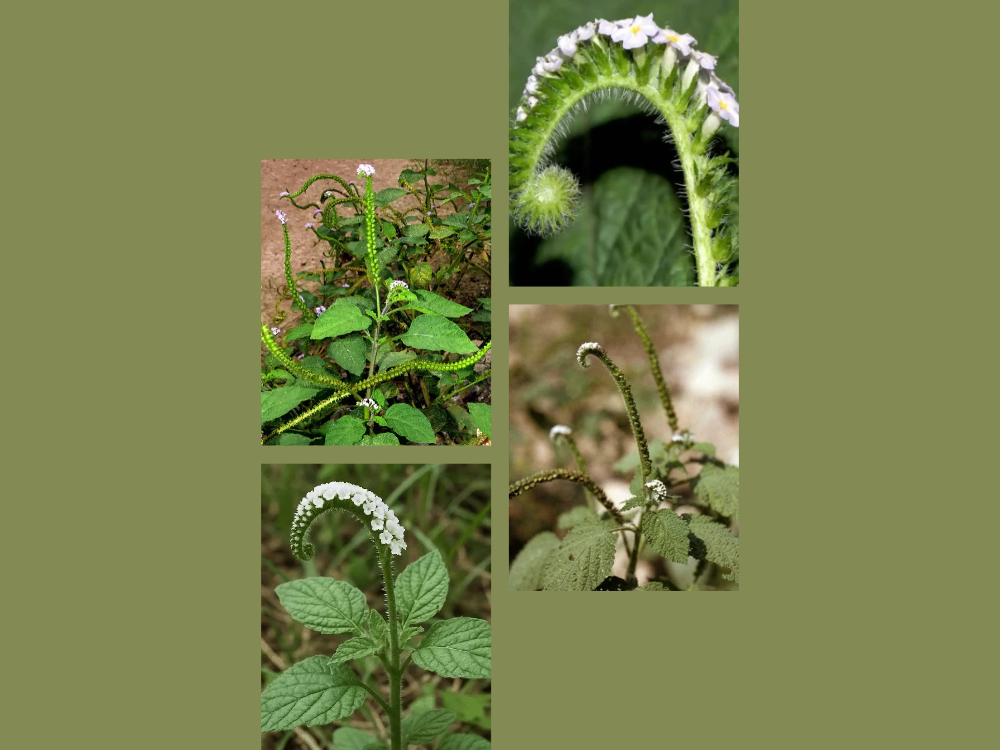
Description
Heliotropium is an upright-growing plant covered with fine hairs. Its surface appears glossy when exposed to sunlight. The leaves are approximately 2.5–5 cm (1–2 inches) wide, egg-shaped, and slightly rough in texture. They are broader towards the tip and narrower at the base.
Flowers
The flowers are blue and grow in pairs. They are arranged in elongated, raceme-like clusters measuring approximately 5–6.5 cm (2–2.5 inches) in length.
Fruit
The fruit is round in shape.
Root
The root is blue in colour.
Habitat and Distribution
Heliotropium is found in the plains of several regions of South Asia, including Punjab, Rajasthan, Sindh, Kashmir, and Balochistan.
Chemical Composition
The plant contains toxic alkaloids, which may have harmful effects if consumed improperly. Therefore, its medicinal use requires caution and professional guidance.
Temperament
According to traditional Unani medicine, Heliotropium is considered hot and dry in the second degree.
Medicinal Properties and Actions
In traditional medicine, Heliotropium is described as a blood purifier and is used as a remedy for chronic fevers. It is also traditionally associated with the elimination of sauda (black bile), one of the four humours recognised in Unani medicine.
Traditional Medicinal Uses
Due to its traditionally recognised blood-purifying properties, Heliotropium has been used for various conditions believed to result from impurities in the blood. These include erysipelas (a bacterial skin infection characterised by red, inflamed skin), itching, and leprosy.
It has also been traditionally used in preparations intended to manage chronic or long-standing fevers.
Specific Benefits
In Unani medicine, its principal traditional benefits include blood purification and the elimination of sauda (black bile).
Dosage
The traditional dosage is 5–7 masha (approximately 5.8–8.2 grams), based on the standard conversion of 1 masha ≈ 0.97–1.17 grams.
Recent Posts

Curculigo Orchioides (Black Musli): Description, Traditional Uses, and Medicinal Properties

Mimusops elengi Linn. (Mulsari): Traditional Medicinal Uses, Properties, and Benefits

Pyrethrum Indicum (Bozidan): Traditional Medicinal Uses, Properties, and Benefits






Mesua ferrea (Nagkesar): Description, Medicinal Properties, and Traditional Uses


