






Large Cardamom (Amomum subulatum): Medicinal Properties, Uses, and Benefits
Introduction
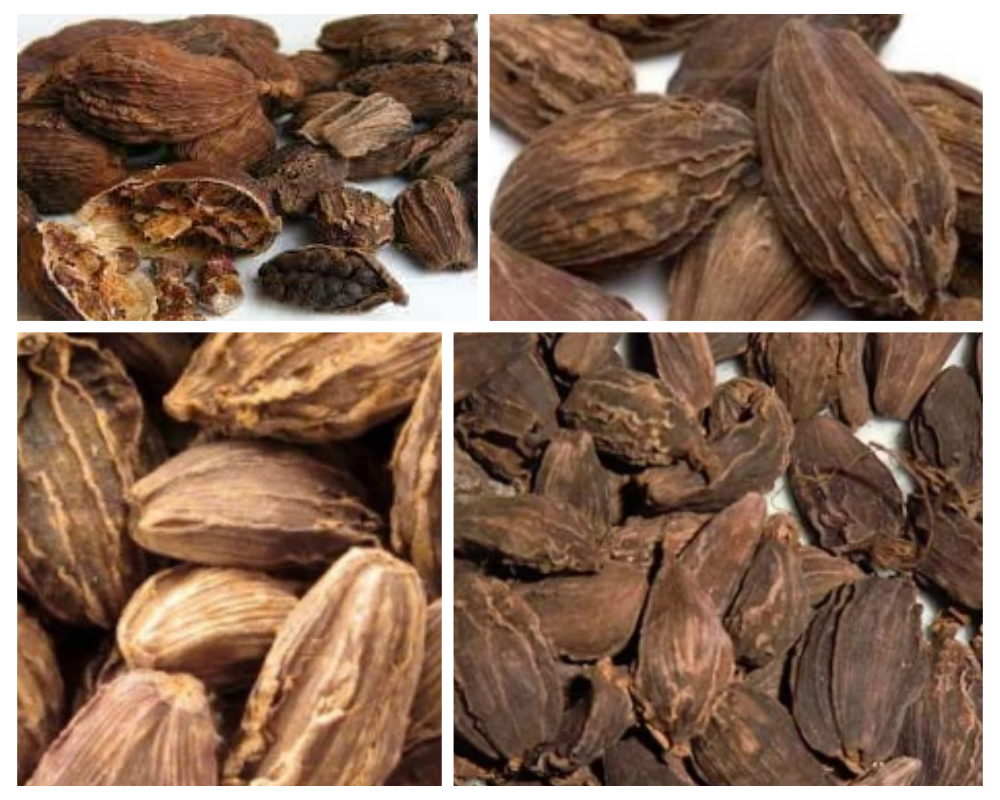
Large cardamom, commonly known as black cardamom, is an aromatic medicinal spice traditionally valued for its digestive and therapeutic properties. It belongs to the same botanical family as small cardamom (green cardamom) and is traditionally used for similar purposes. Its seeds have a sharp, slightly bitter taste and a pleasant aroma. In traditional medicine, large cardamom is used as a mouth freshener, stomach tonic, and digestive aid. It is also valued for its carminative properties and traditional use in managing nausea and diarrhoea.
Botanical Description
Large cardamom typically grows in Bengal, Malabar, coastal regions, and rocky areas near ponds. It is an evergreen plant belonging to the ginger family. Its appearance resembles that of ginger and Amba Haldi (mango ginger).
The plant generally reaches a height of approximately 3 to 4 feet and thrives in suitable moist environments.
Leaves
The leaves are approximately 18 to 20 inches long and 4 to 5 inches wide. They are somewhat rounded, grooved, and channel-shaped, with a dull, greyish-green colour.
Flowers
The flowers emerge from the lower portion of the stem. They are white, tubular, and marked with distinctive purple spots.
Fruits and Seeds
The fruits are round, pointed, and reddish in colour. As they dry, they turn brown and develop characteristic longitudinal ridges.
Each fruit contains aromatic seeds with a sharp, slightly bitter taste and a pleasant fragrance. These seeds are the primary part used in traditional medicinal preparations and culinary applications.
Temperament
According to traditional Unani medicine, large cardamom has a hot and dry temperament of the second degree.
Medicinal Properties and Actions
Large cardamom possesses several properties that make it valuable in traditional medicine. Its principal actions include:
Mouth Freshener: Traditionally used to freshen the breath and reduce unpleasant mouth odour.
Stomach Tonic: Used to support stomach function and improve digestive health.
Digestive Aid: Traditionally used to promote digestion and relieve digestive discomfort.
Carminative: Helps expel intestinal gas and relieve flatulence.
Exhilarant: Traditionally regarded as a mood-lifting and refreshing agent.
Antidiarrhoeal: Traditionally used in preparations for managing diarrhoea.
Antiemetic: Used to help alleviate nausea.
Medicinal Uses of Large Cardamom
Freshening the Breath
Large cardamom is traditionally chewed in the same way as small cardamom to freshen the breath. Its pleasant aroma helps reduce unpleasant mouth odour and leaves a refreshing taste.
Improving Digestion
Large cardamom is traditionally used as a stomach tonic and digestive aid. It is believed to support digestive function and help relieve discomfort associated with weak digestion.
Relieving Flatulence and Bloating
Due to its carminative properties, large cardamom is used in traditional remedies to expel accumulated intestinal gas. It may help reduce abdominal bloating and discomfort associated with flatulence.
Managing Diarrhoea
In traditional medicine, large cardamom is used in preparations intended to manage diarrhoea. Its historical use is associated with its traditionally recognised digestive and astringent properties. However, it should not replace appropriate treatment, particularly when diarrhoea causes dehydration.
Relief from Nausea
Large cardamom is traditionally regarded as an anti-nausea agent. Its aromatic seeds are used in various preparations intended to relieve nausea and digestive discomfort.
Traditional Use in Wasting Diseases
Traditional medicinal literature also mentions large cardamom for Diq, a historical term associated with tuberculosis and wasting diseases. However, there is no established clinical evidence that large cardamom treats tuberculosis. Medical diagnosis and appropriate treatment are essential for this serious infectious disease.
Benefits and Traditional Preparations
Large cardamom is considered a substitute for small cardamom and can be used in several traditional preparations.
Common forms include:
Powder (Safoof): Dried seeds are ground into powder for use in traditional formulations.
Decoction (Joshanda): The seeds are boiled in water to prepare an aromatic herbal drink.
Chewing: The seeds or pods may be chewed to freshen the breath.
Specific Therapeutic Benefits
The principal therapeutic benefits traditionally associated with large cardamom include:
Antidiarrhoeal: Traditionally used in remedies for diarrhoea.
Antiemetic: Used to help relieve nausea.
Digestive Support: Traditionally valued for improving digestion and relieving flatulence.
Substitute (Badal)
Small cardamom (green cardamom) is traditionally considered a substitute for large cardamom because of their similar medicinal properties and uses.
Dosage
The traditional dosage of large cardamom is:
4 ratti to 1 masha (approximately 0.5–1 gram).
The appropriate quantity may vary according to the preparation and individual circumstances.
Safety Precautions
Large cardamom is commonly used as a culinary spice. However, its traditional medicinal applications should be distinguished from scientifically established treatments. It should not be relied upon to treat persistent diarrhoea, tuberculosis, or other serious illnesses. People experiencing prolonged diarrhoea, dehydration, unexplained weight loss, or persistent nausea should seek medical advice. Concentrated herbal preparations should be used cautiously and under professional guidance.
Recent Posts

Curculigo Orchioides (Black Musli): Description, Traditional Uses, and Medicinal Properties

Mimusops elengi Linn. (Mulsari): Traditional Medicinal Uses, Properties, and Benefits

Pyrethrum Indicum (Bozidan): Traditional Medicinal Uses, Properties, and Benefits






Mesua ferrea (Nagkesar): Description, Medicinal Properties, and Traditional Uses


