



Neem (Melia Azedarach): Medicinal Uses, Benefits, and Properties
Introduction
Neem (Melia azedarach) is a medicinal tree traditionally valued for its blood-purifying, antiseptic, and germicidal properties. Various parts of the tree, including its leaves, flowers, fruits, seeds, and bark, have been used in traditional medicine to prepare remedies for skin conditions, wounds, boils, itching, and other ailments. Neem oil, extracted from its seeds, is also traditionally used in skincare preparations and soap manufacturing.
Description
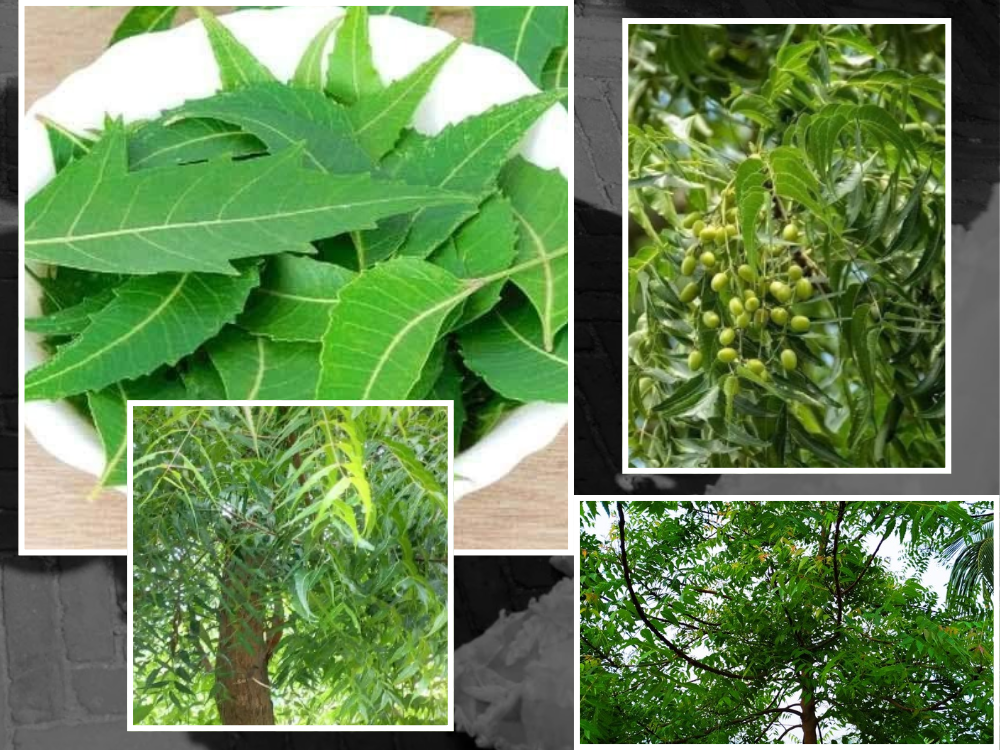
The neem tree grows up to approximately 50 feet (15 metres) tall and provides dense shade. Its leaves are elongated, pointed, and approximately 2–2.5 inches (5–6.4 cm) long, with serrated edges. They grow in clusters of 6–11 pairs along a central stalk measuring approximately 6–10 inches (15–25 cm) in length.
In early spring, the old leaves and stalks shed and are replaced by new, soft, glossy leaves with a reddish appearance. The tree generally remains green and leafy for approximately 10–11 months of the year. Its trunk and branches are dark greenish-black.
In late spring, the tree produces numerous small, white flowers with a pleasant fragrance resembling jasmine. After flowering, small, round to elongated fruits develop in clusters. They initially appear green but turn yellow when ripe. Their outer covering develops a sweet taste that may attract children.
The seeds inside these fruits are known as Nimboli. An oil extracted from them is traditionally used for skin conditions such as scabies and is also utilized in soap manufacturing.
For medicinal purposes, different parts of the neem tree are used, including its fruits, flowers, bark, seeds, and leaves. It is found throughout the plains of Pakistan and India, as well as in Myanmar (Burma).
Chemical Composition
The inner bark contains a light-yellow, resinous substance, while the outer bark contains tannins and sugars. The seeds contain a small quantity of volatile (essential) oil as well as non-volatile (fixed) oil.
The fixed oil is traditionally used in preparations for skin conditions such as scabies. The seeds also contain trace amounts of sulfur.
Temperament (Mizaj)
According to traditional Unani medicine, neem is considered hot and dry in the first degree.
Medicinal Properties and Actions
Neem is traditionally described as having the following medicinal properties:
Blood purifier
Sedative
Resolvent (helps reduce swellings)
Germicidal
Febrifuge (fever-reducing)
Incisive (helps break down accumulated morbid matter)
Laxative
Maturant (promotes the ripening of abscesses)
Anthelmintic (traditionally used against intestinal worms)
Ulcer cleanser
Antiseptic
Medicinal Uses and Traditional Benefits of Neem
1. Blood Purification and Skin Conditions
Neem is traditionally regarded as a blood purifier and is used in remedies for various skin conditions, including boils, pimples, itching, leprosy, and syphilis. Both dry and moist forms of itching are mentioned in traditional applications.
Its leaves, bark, and oil are used in different preparations intended to cleanse the skin and relieve irritation.
2. Treatment of Wounds and Ulcers
A decoction prepared from neem is traditionally used to wash foul-smelling and spreading wounds. Its antiseptic and germicidal properties are believed to help eliminate unpleasant odors and destroy harmful microorganisms.
Washing wounds with neem leaf decoction is also traditionally recommended for removing dead tissue and accumulated debris. It is believed to help cleanse the affected area and reduce the risk of infection.
3. Neem Leaves for Swellings, Boils, and Pimples
A poultice prepared from fresh neem leaves can traditionally be applied to swellings, boils, and pimples. It is believed to help reduce inflammation and promote the maturation and drainage of boils.
4. Traditional Use for Infected Wounds
Water prepared by boiling neem leaves has traditionally been used for washing wounds affected by maggots or infection. Neem is valued in these preparations for its germicidal properties.
However, neem preparations should not replace proper medical wound cleaning, prescribed antibiotics, or professional treatment of infected wounds.
5. Neem Bark for Fever
Neem bark is traditionally considered a powerful blood purifier. A decoction prepared from the bark has been used in traditional medicine for managing fever.
Persistent or high fever requires medical evaluation rather than relying on herbal preparations alone.
6. Protection of Clothes from Insects
Neem leaves are traditionally placed between stored clothes to protect fabrics from insect damage. Their strong natural compounds are believed to help repel certain insects.
7. Traditional Uses of Neem Flowers for Eye Care
Neem flowers can be finely ground and heated in oil to prepare a traditional Kajal (kohl). According to traditional accounts, this preparation is used to relieve eye itching and styes.
Neem flowers have also been used in traditional Kajal and Surma preparations associated with fever relief.
Safety note: Homemade neem preparations should never be applied inside the eyes or used as eye medication. Eye irritation and styes should be assessed and treated with appropriate eye-care products.
8. Neem Fruits for Constipation
Ripe neem fruits, known as Nimboli, are traditionally consumed to soften the stool and support bowel movements. However, neem fruits should not be eaten as a home remedy without professional guidance because some parts of the plant may be toxic.
9. Neem Kernel for Hemorrhoids
The kernel of the neem fruit is traditionally included in medicinal preparations for hemorrhoids (Bawaseer). Its traditional use is associated with its purported anti-hemorrhoidal and anthelmintic properties.
10. Neem Oil for Skin Problems
Neem seed oil is traditionally applied to the skin for conditions such as itching, wounds, boils, and certain skin disorders.
It is particularly known in traditional preparations for managing scabies. However, neem oil is not a substitute for clinically approved scabies treatment, and concentrated oil may cause skin irritation.
11. Neem Kernels for Hair and Lice
A paste prepared by grinding neem kernels is traditionally used to wash the hair. It is believed to help eliminate head lice and cleanse the scalp.
12. Neem Gum as a Traditional Tonic
The neem tree also produces a type of natural gum or resin. In traditional medicine, this substance is regarded as a tonic, stimulant, and blood purifier.
Primary Medicinal Benefit
The principal traditional benefit attributed to neem is blood purification. Its leaves, bark, flowers, fruits, seeds, and oil are used in various traditional preparations for skin cleansing, wound care, and other medicinal purposes.
Harmful Effects and Precautions
According to traditional Unani medicine, neem may not be suitable for individuals with a naturally dry temperament.
The following precautions are also important:
Neem seeds and fruits may contain toxic compounds. Avoid consuming them as home remedies.
Neem oil should not be swallowed, particularly by children, because ingestion can cause serious poisoning.
Concentrated neem oil may cause skin irritation or allergic reactions.
Pregnant and breastfeeding individuals should avoid medicinal neem preparations unless advised by a qualified healthcare professional.
Traditional neem remedies should not replace prescribed treatments for infections, scabies, eye conditions, or other medical problems.
Corrective Agent (Musleh)
According to traditional Unani medicine, cow's ghee (clarified butter) is considered the corrective or mitigating agent for neem.
Recent Posts
Curculigo Orchioides (Black Musli): Description, Traditional Uses, and Medicinal Properties
Mimusops elengi Linn. (Mulsari): Traditional Medicinal Uses, Properties, and Benefits
Pyrethrum Indicum (Bozidan): Traditional Medicinal Uses, Properties, and Benefits
Mesua ferrea (Nagkesar): Description, Medicinal Properties, and Traditional Uses