






Sharbat-e-Ikseer-e-Niswan: Traditional Unani Syrup for Women's Health
Introduction
Sharbat-e-Ikseer-e-Niswan, also known as the Elixir for Women, is a traditional Unani herbal syrup historically described for menstrual irregularities and various gynecological complaints. The original formulation combines several medicinal herbs with white sugar and Liquid Extract of Ergot.
Traditional sources claim that this preparation helps regulate menstrual flow and relieve certain uterine complaints. However, these claims have not been established by reliable clinical evidence, and the formulation contains ingredients that may cause serious harm.
Ingredients
The historical formulation lists the following ingredients:
| Ingredient | Historical quantity | Approximate metric equivalent |
|---|---|---|
| Shuka'i | 2 tolas | 23.3 g |
| Baad Aaward | 2 tolas | 23.3 g |
| Biranjasif | 2 tolas | 23.3 g |
| Afsanteen-e-Rumi (Roman wormwood) | 2 tolas | 23.3 g |
| Shahtera (fumitory) | 2 tolas | 23.3 g |
| Charayta (chiretta) | 2 tolas | 23.3 g |
| Gul-e-Mundi (globe thistle/Sphaeranthus, as identified in the source) | 2 tolas | 23.3 g |
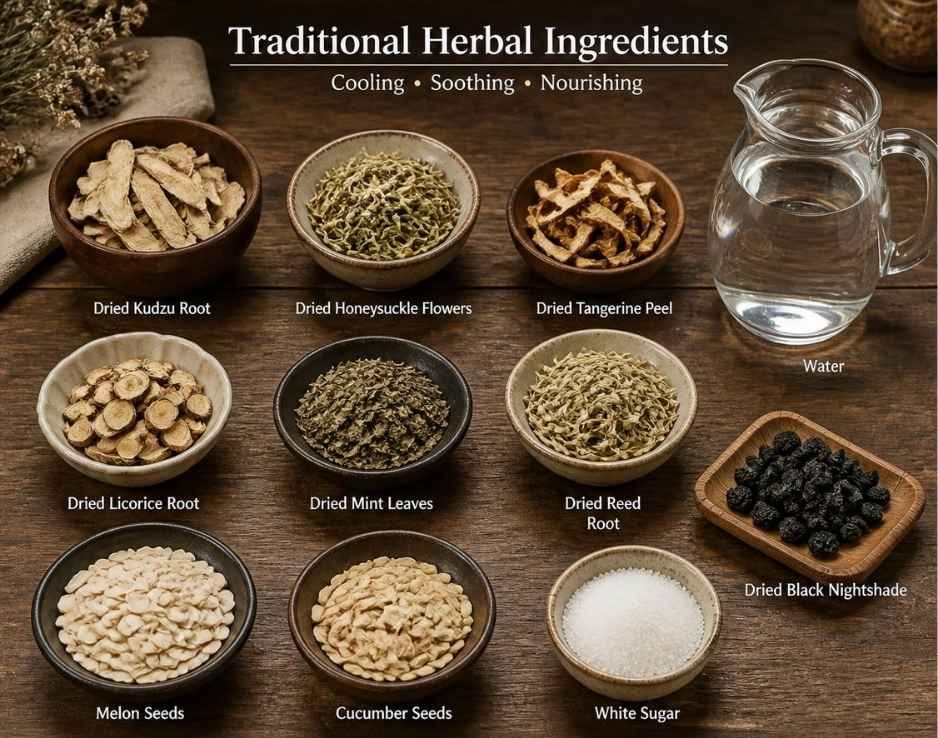
| Makoh Khushk (dried black nightshade) | 2 tolas | 23.3 g |
| Sarphooka (Tephrosia, as identified in the source) | 2 tolas | 23.3 g |
| Tukhm-e-Kharbooza (melon seeds) | 2 tolas | 23.3 g |
| Tukhm-e-Khiyareen (cucumber seeds) | 2 tolas | 23.3 g |
| Khar-e-Khasak (Tribulus/caltrop) | 2 tolas | 23.3 g |
| Qand-e-Safed (white sugar) | 1.25 seers | Approximately 1.17 kg, using 1 seer ≈ 933 g |
| Water | 2.5 seers | Approximately 2.33 litres, using 1 seer ≈ 933 ml |
| Liquid Extract of Ergot | 1 ounce | Approximately 29.6 ml if a US fluid ounce is intended; the original unit requires verification |
Note: Some traditional ingredient names can refer to different plants or preparations depending on the source. Their botanical identities and the exact meaning of the historical measurements should be verified before the formulation is discussed in a scientific or pharmaceutical context.
Historical Preparation Method
According to the original description, the herbs are coarsely crushed and soaked in water overnight. The following morning, the mixture is distilled to obtain an herbal araq (distillate). White sugar is then added, and the liquid is prepared into a syrup, known as qawam. The historical recipe subsequently specifies adding Liquid Extract of Ergot.
This is a record of the traditional method, not a recommendation to prepare the syrup. Ergot-containing preparations can cause severe toxicity, and distillation or mixing with sugar does not make them safe.
Traditional Uses and Claimed Benefits
Historical Unani literature associates this syrup with the following complaints:
Scanty or absent menstrual flow
Irregular menstrual cycles
Painful menstruation
Leucorrhoea (vaginal discharge)
Uterine discomfort or inflammation
Vaginal itching
Uterine weakness, as described in traditional terminology
Difficulty conceiving
Other historical reproductive-health complaints
The source also claims that the syrup promotes menstrual flow, clears uterine obstructions, and relieves uterine pain. These are historical claims and should not be presented as proven benefits or as evidence that the preparation can treat infertility, infection, or menstrual disorders.
Historical Administration
The original text records one tola of syrup twice daily, mixed with ten tolas of water, fennel distillate (Araq-e-Saunf), or cow's milk.
This dosage is included only to document the historical source. It is not a safe-use recommendation, and the preparation should not be taken without a proper safety assessment by a qualified medical professional.
Historical Warning Regarding Pregnancy and Menstruation
The original source warns against use during pregnancy or menstruation. Given the presence of Liquid Extract of Ergot, this warning is not sufficient to establish safety at other times.
Ergot compounds can constrict blood vessels and cause serious adverse effects. They may also pose particular risks during pregnancy. Do not use this preparation to induce menstruation, treat infertility, or manage miscarriage. Suspected miscarriage or pregnancy-related bleeding requires prompt medical assessment.
Historical Testimonials
The original text includes the following testimonials:
Hakim Wazir Ali Ansari, Sialkot: Reported that the preparation was useful and effective in his experience.
Hakim Muhammad Yusuf bin Bajwa: Described it as extremely useful and effective.
The author: Called it an excellent gift.
These statements are historical testimonials, not independently verified clinical evidence of safety or effectiveness.
Important Medical and Safety Disclaimer
Sharbat-e-Ikseer-e-Niswan should not be prepared or used as a home remedy. Liquid Extract of Ergot can cause dangerous blood-vessel constriction, severe circulation problems, neurological complications, and other potentially life-threatening effects. Several of the listed herbs also require precise botanical identification and safety assessment.
Persistent menstrual irregularities, unusual vaginal discharge, pelvic pain, or difficulty conceiving should be evaluated by a qualified healthcare professional. Seek urgent medical attention for severe pelvic pain, heavy bleeding, fainting, or bleeding during pregnancy.
Recent Posts

Curculigo Orchioides (Black Musli): Description, Traditional Uses, and Medicinal Properties

Mimusops elengi Linn. (Mulsari): Traditional Medicinal Uses, Properties, and Benefits

Pyrethrum Indicum (Bozidan): Traditional Medicinal Uses, Properties, and Benefits






Mesua ferrea (Nagkesar): Description, Medicinal Properties, and Traditional Uses


